
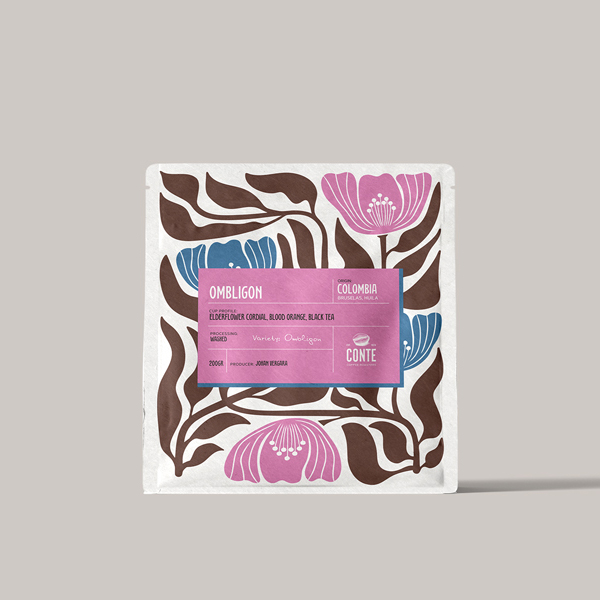
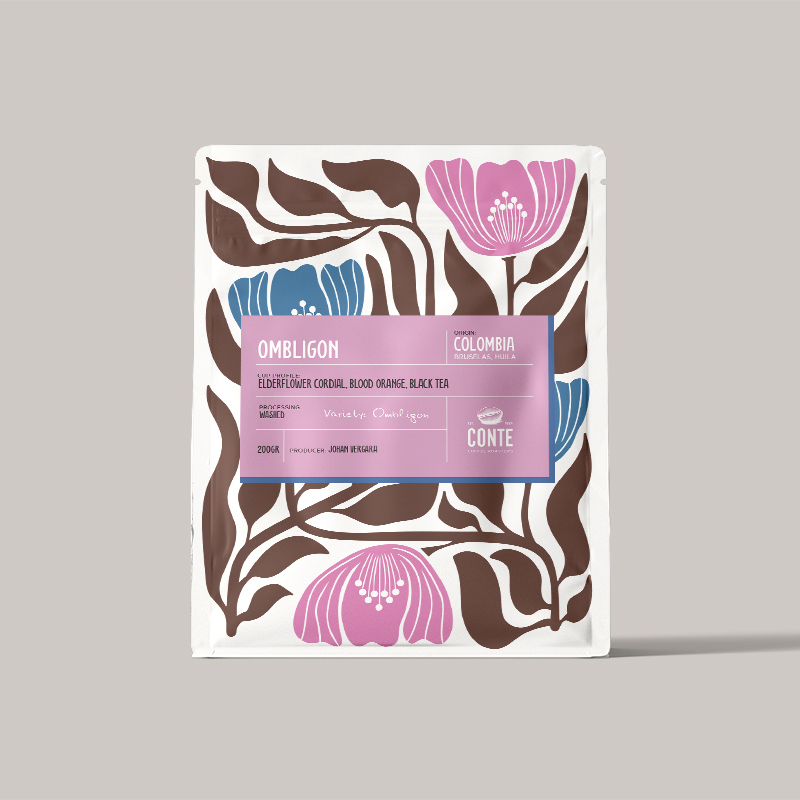
OMBLIGON
23,00 €
Origin: Bruselas,Huila, Colombia
Farm: Finca las Flores
Altitude: 1850
Variety: Ombligon
Processing: Washed
Cup Profile: Elderflower Cordial, Blood Orange, Black Tea
200gr
Acevedo lies in southern Huila, in the upper Magdalena Valley close to where the Central and Eastern ranges of the Andes meet, in the part of the department that produces most of its coffee. Finca Las Flores receives around 1,113 mm of rainfall a year, with marked variation in humidity and temperature. Colombia has two harvests a year, and in the south the mitaca, or mid-crop, carries a large share of production. Coffee here is grown on small family farms, each with its own wet mill for pulping, fermenting, washing and drying.
Finca Las Flores was founded in 1990, when Edilberto Vergara and Nubia Ayure moved from Cundinamarca to Acevedo and planted 2 hectares of Caturra and Colombia. Their sons Carlos, Jhoan and Diego, third-generation growers, began adding varieties in 2006, the same year the farm placed 16th in the Colombian Cup of Excellence. The farm now covers 14.5 hectares with 90,000 coffee trees, 1.5 hectares of which are kept as a nature reserve, and grows Java, Pacamara, Tabi, Pink Bourbon, Chiroso, Sidra, Catimor and Ombligon. Carlos and Diego manage logistics, while Jhoan leads quality and works with other producers on processing development. Las Flores is one of five Acevedo farms, alongside El Diviso, La Cordillera, El Triunfo and La Maria, that collaborate on processing and farm development.
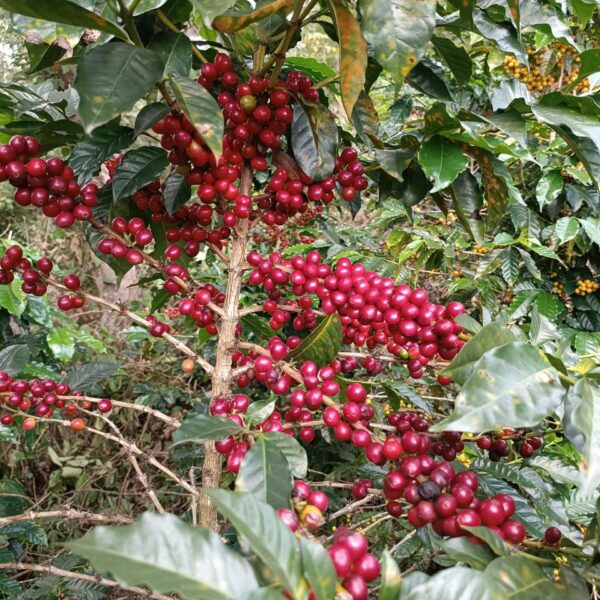
Ombligon takes its name from ombligo, navel, after the shape of the cherry. It is grown mainly in Huila and its lineage is commonly linked to Ethiopian landrace material, though its genetics are not fully established. For this washed lot, the ripest cherries were harvested and then hand sorted to remove impurities. The cherry was first fermented for 18 hours in permeable polypropylene fibre bags, then moved to 200-litre plastic barrels for a 36-hour anaerobic fermentation without added water. It was then floated to remove remaining impurities and pulped. A second anaerobic fermentation followed, lasting 48 hours, and fermentation was closed with a warm thermal shock wash at 35°C. The parchment was dried on solar parabolic canopy dryers for 12 to 15 days. Before export the coffee was analysed by the farm’s quality team, stabilised in the warehouse, and then hulled and sorted
Related products
-
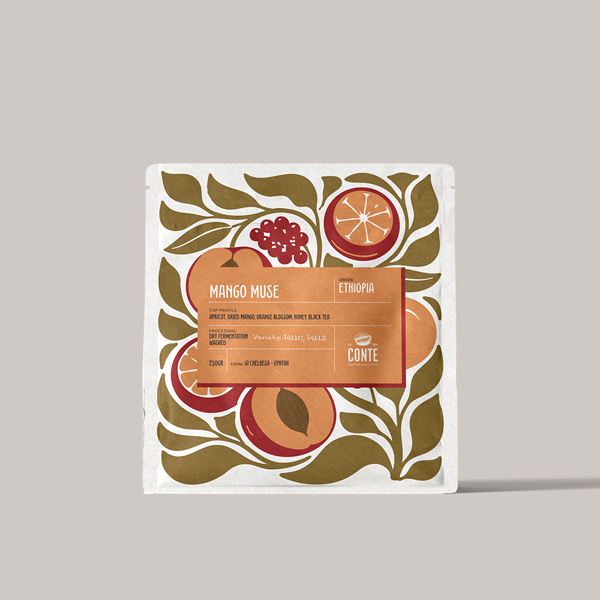

MANGO MUSE
16,50 € Select options This product has multiple variants. The options may be chosen on the product page -
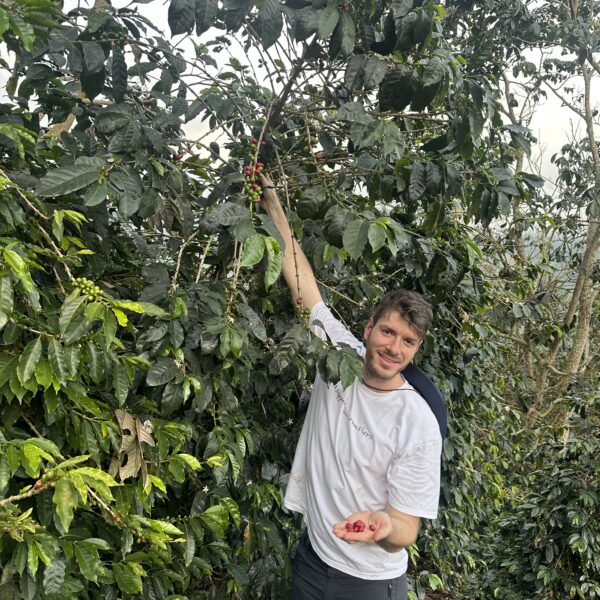
GUAVA BANANA
16,00 € Select options This product has multiple variants. The options may be chosen on the product page -
ROCKET FLOWER
18,50 € Select options This product has multiple variants. The options may be chosen on the product page -
PINK LEMONADE
12,50 € Select options This product has multiple variants. The options may be chosen on the product page